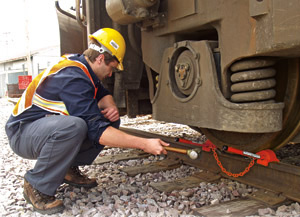
A gust of wind is enough to cause a 260,000-pound freight car to start rolling. Thanks to roller bearings, freight car wheels offer very little resistance to movement. The contact area of each wheel on the rail is smaller that the size of a dime. This is why moving heavy loads by rail is so efficient! But at the same time, all this mass, so easily moved, needs to be securely blocked while the car is being worked.
Loading freight cars increases the strain on the car brakes. Liquid pouring into a tank car or a forklift moving back and forth in a boxcar creates dynamic forces which can overcome the holding power of the brakes.
Slack in mechanical car brakes can be enough to allow a wheel to move forward a few inches and dislodge a dock board or strain a hose line
This is why OSHA mandates the use of wheel chocks in addition to car brakes wherever rail cars are being worked.
Aldon® Chocks have the Edge
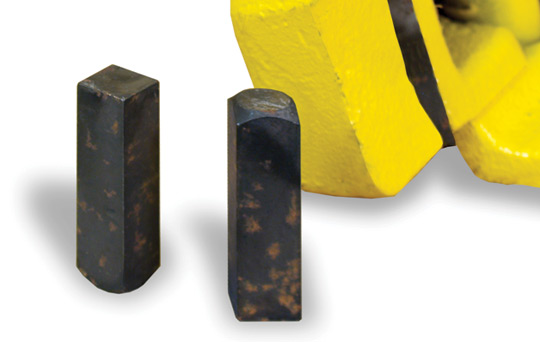
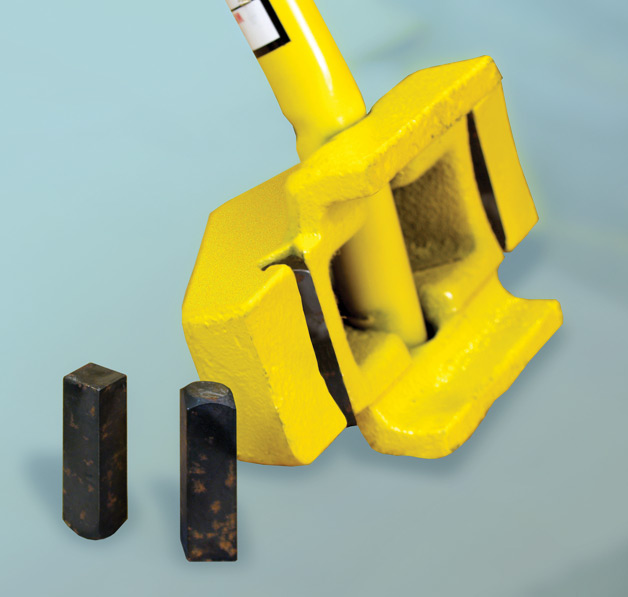
In 1955 Aldon Company, Inc. introduced cast steel chocks with the unique feature of replaceable spurs (or teeth). The spur is the key to effective choking. Under wheel pressure, the spur bites into the hard, smooth surface of the rail to keep the chock from sliding. But eventually, like the blades of a knife, the spur edge will become dull from use.
A dull spur can’t bite into the rail to keep the chock from sliding. You can keep the sure grip of an Aldon® wheel chock by turning the spur to three new sharp edges and then replacing the spurs at minimal cost instead of buying a new wheel chock.
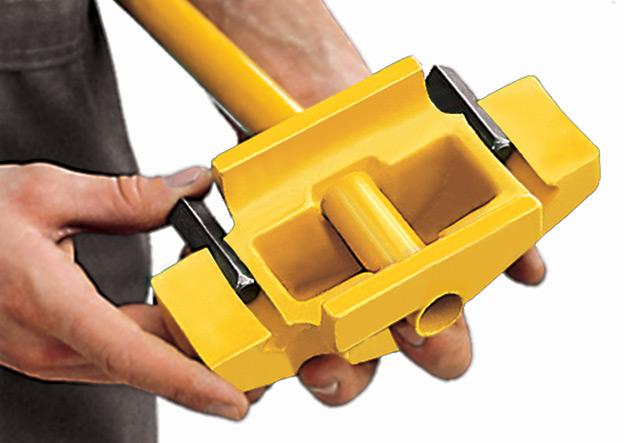
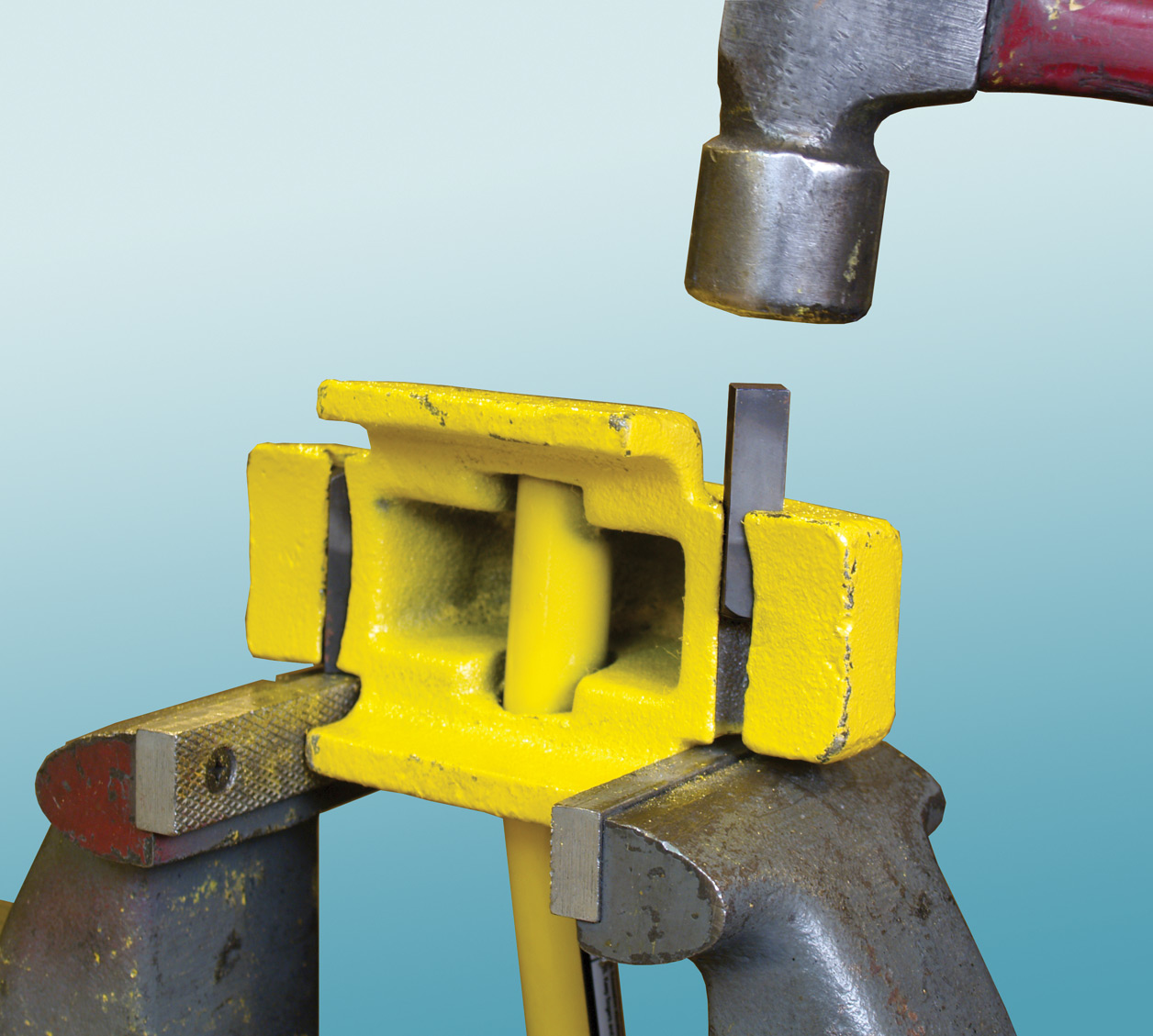
It’s easy to turn and replace worn spurs in Aldon® Chocks
Chock spurs have four edges. When the first edge becomes dulled from use, you can tap the spur out of its slot and re-insert it with a fresh edge exposed. By turning the spurs at intervals you extend the service life and effectiveness of your wheel chocks.
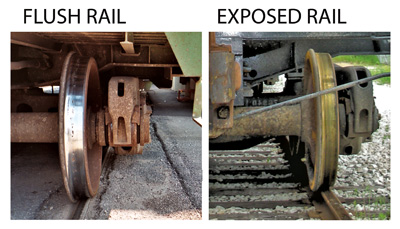
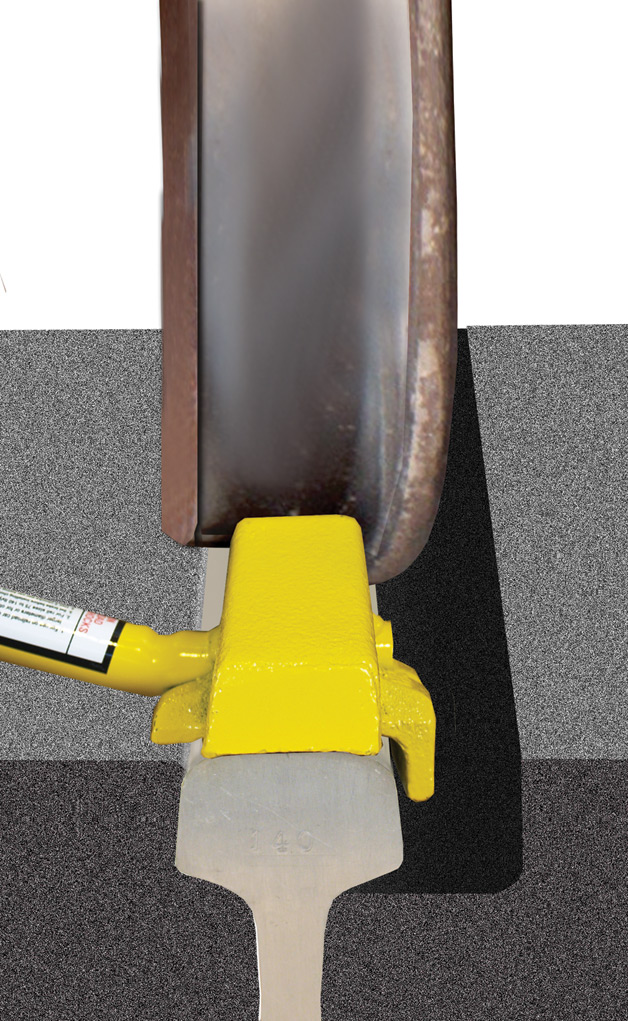
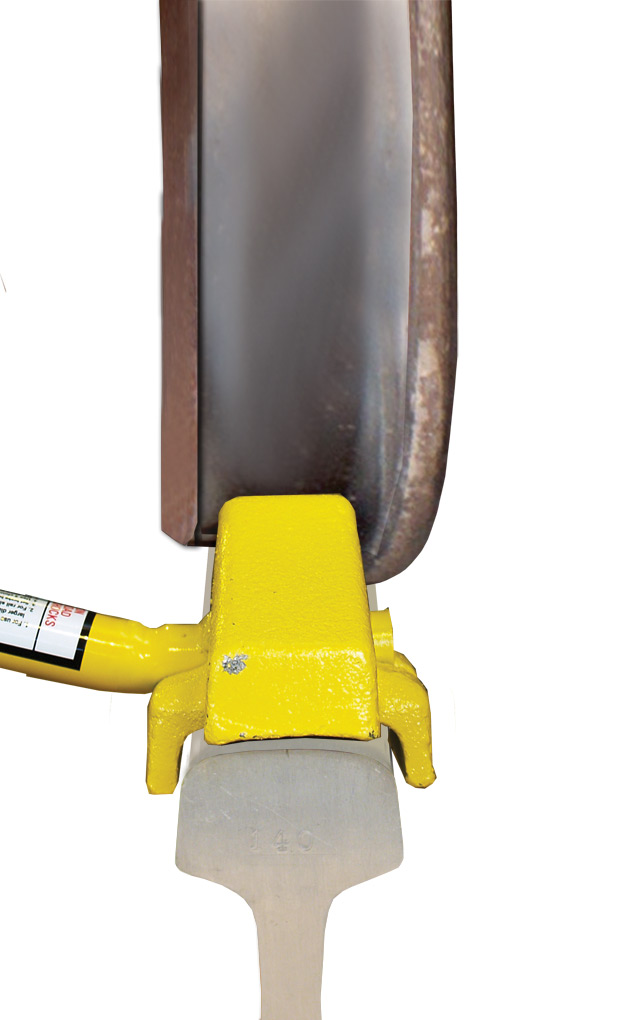
One type of chock does not fit every rail situation. Aldon® offers flush rail chocks and exposed rail chocks. Exposed rail is open to the ties. Flush rail is encased in the pavement, with only a flangeway left open on the inside of both rails for wheels to pass through.
Single Chocks or Double Chocks
Recommended chocking procedures for single cars on a flat track
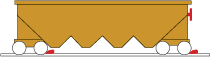
Single Idle Car on Storage Track
If the track is flat and there is no vibration, double chocks at each end can be used to block car movement.
Set brake before chocking.
Single Car Being Worked – Slight Dip
If the car tends to roll in one direction, single chocks at each end may be sufficient.
Set brake before chocking.
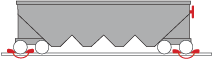
Single Car Being Worked – Flat Track
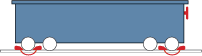
Double Chocks on each end of the car provide two-chock blocking against movement in either direction.
Set brake before chocking.
Recommended chocking procedures for multiple cars on a flat track
In a line of coupled freight cars, on a flat track, brake, and chock the car to be worked. It may be necessary to apply the brake to several coupled cars depending on operating conditions or track conditions.
Repeat the braking and chocking of each subsequent car to be worked. Chock both ends of the car being worked. Always use double chocks at both ends of the car.
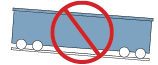
Car on a sloped track
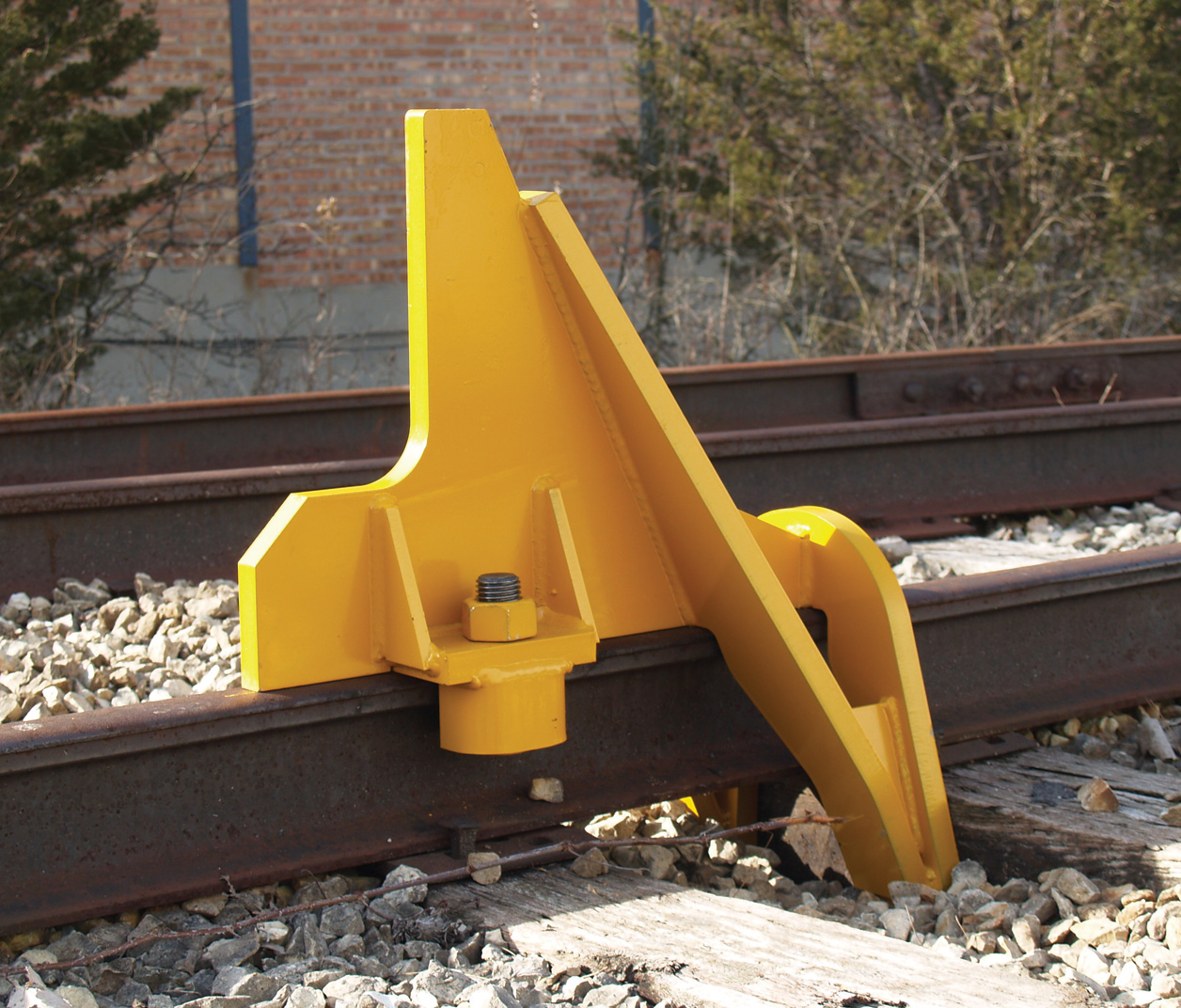
Do not use wheel chocks on sloped track. Use car stops or rail skates. (NO IMPACT)
(4) Handling pulpwood from flatcars and all other railway cars.
(V) Flatcars and all other cars shall be chocked during unloading. Where equipment is not provided with hand brakes, rail damping chocks shall be used.
(vi) A derail shall be used to prevent movement of other rail equipment into cars where persons are working.
Loading Tank Cars
1910.111(b) …
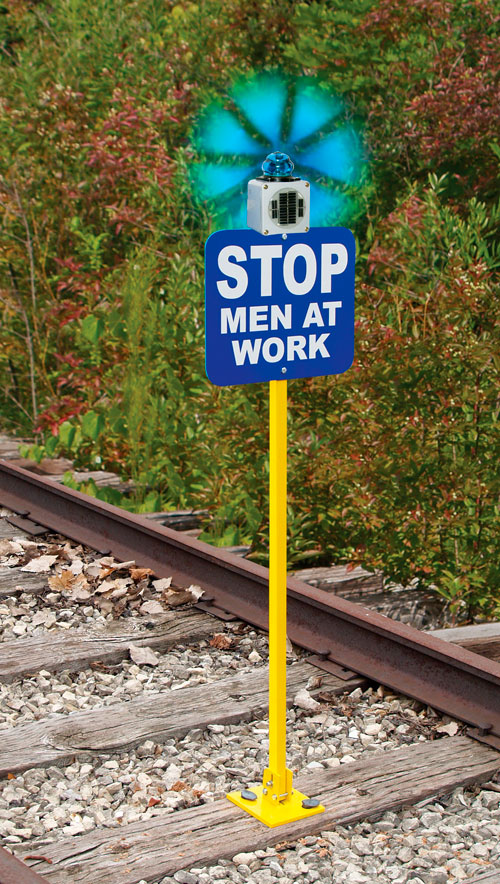
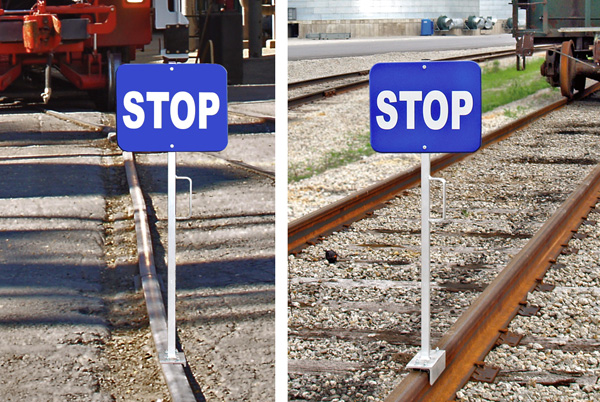
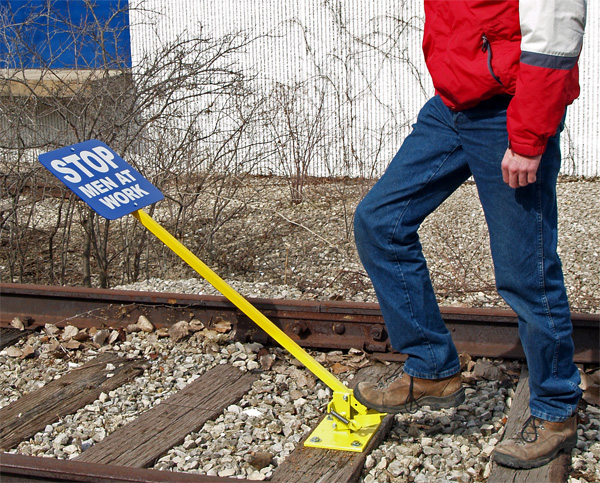
(iii) Caution signs shall be so placed on the track or car as to give necessary warning to persons approaching the car from open end or ends of siding and shall be left up until after the car is unloaded and disconnected from discharge connections. Signs shall be of metal or other suilable material, at least 12 by 15 inches in size and bear the words ‘’STOP-Tank Car Connected” or ‘’STOP-Men at Work” the word, “STOP,’ being in letters at least 4 inches high and the other words in letters at least 2 inches high.
(iv) The track of a tank car siding shall be substantially level.
(v) Brakes shall be set and wheels blocked on all cars being unloaded.
1910.110(b)(15) …
(iii) While cars are on sidetrack for loading or unloading, the wheels at both ends shall be blocked on the rails.
Freight Cars in General
1910.178(k)
(2) Wheel stops or other recognized positive protection shall be provided to prevent railroad cars from moving during loading or unloading operations.
(4) Positive protection shall be provided to prevent railroad cars from being moved while dockboards or bridge plates are in position.
1910.178(m) …
(7) Brakes shall be set and wheel blocks shall be in place to prevent movement of trucks, trailers, or railroad cars while loading or unloading.
1910.30(a) …
(5) Positive protection shall be provided to prevent railroad cars from being moved while dockboards or bridge plates are in position.
1910.176 …
(f) Rolling railroad cars. Derail and/or bumper blocks shall be provided on spur railroad tracks where a rolling car could contact other cars being worked, enter a building, work or traffic area.
For use on railroad car or locomotive wheels 28″-44″. Do not use on smaller or larger diameter or on other types of wheels.
For rail sizes 75 to 141 lbs./yd.
Set brake before installing chock. Chock alone may not hold car in place.
Use 2 chocks per car being chocked.
DO NOT install chocks while car is moving.
Rail surface must be clean. Do not install this product on oily or greasy rail – product may slip.
Spurs are important in holding chock to rail. Rotate spur when edge becomes dull. Replace spurs when necessary. Dull or missing spurs may cause chocks to slip.
Do not use chocks on grades. If your track has a dip or a hollow, extra care must be taken to secure car.
Chocks may not hold if rail car is lifted up at one end.
Excessive vibration may cause a chock to slip.
Keep fingers and hands away from car wheel. Watch your head!
On double chocks, always use tarp strap (supplied with chocks) to draw chocks tight.
Do not use impacting wrenches with bronze sockets. Use hand wrench only. Limit torque (non-impacting) to 500 ft/lbs.
Service life of bronze sockets is indeterminate: it is based on torque applied, frequency of use, and whether wrench drive is secured in socket with a locking pin. Because bronze is a soft metal it is spark-resistant, but has a shorter service life than steel.
(4) Handling pulpwood from flatcars and all other railway cars.
(V) Flatcars and all other cars shall be chocked during unloading. Where equipment is not provided with hand brakes, rail damping chocks shall be used.
(vi) A derail shall be used to prevent movement of other rail equipment into cars where persons are working.
Loading Tank Cars
1910.111(b) …
(iii) Caution signs shall be so placed on the track or car as to give necessary warning to persons approaching the car from open end or ends of siding and shall be left up until after the car is unloaded and disconnected from discharge connections. Signs shall be of metal or other suilable material, at least 12 by 15 inches in size and bear the words ‘’STOP-Tank Car Connected” or ‘’STOP-Men at Work” the word, “STOP,’ being in letters at least 4 inches high and the other words in letters at least 2 inches high.
(iv) The track of a tank car siding shall be substantially level.
(v) Brakes shall be set and wheels blocked on all cars being unloaded.
1910.110(b)(15) …
(iii) While cars are on sidetrack for loading or unloading, the wheels at both ends shall be blocked on the rails.
Freight Cars in General
1910.178(k)
(2) Wheel stops or other recognized positive protection shall be provided to prevent railroad cars from moving during loading or unloading operations.
(4) Positive protection shall be provided to prevent railroad cars from being moved while dockboards or bridge plates are in position.
1910.178(m) …
(7) Brakes shall be set and wheel blocks shall be in place to prevent movement of trucks, trailers, or railroad cars while loading or unloading.
1910.30(a) …
(5) Positive protection shall be provided to prevent railroad cars from being moved while dockboards or bridge plates are in position.
1910.176 …
(f) Rolling railroad cars. Derail and/or bumper blocks shall be provided on spur railroad tracks where a rolling car could contact other cars being worked, enter a building, work or traffic area.
(1) The brakes of highway trucks shall be set and wheel chocks placed under the rear wheels to prevent the trucks from rolling while they are boarded with powered industrial trucks.
(3) Fixed jacks may be necessary to support a semitrailer and prevent upending during the loading or unloading when the trailer is not coupled to a tractor.
1910.178(m) …
(7) Brakes shall be set and wheel blocks shall be in place to prevent movement of trucks, trailers, or railroad cars while loading or unloading. Fixed jacks may be necessary to support a semitrailer during loading or unloading when the trailer is not coupled to a tractor.
1910.111(f) …
(9) Chock blocks. At least two chock blocks shall be provided. These blocks shall be placed to prevent rolling of the vehicle whenever it is parked during loading and unloading operations.
1910.261(c) …
(7) Handling pulp chips from trucks and trailers. i) All trucks and trailers shall be securely fastened in place and all employees in the clear before dumping is started.
The railroad switch is a marvel of engineering. The ability to smoothly divert a fast moving train from one track to another is really what makes railroading possible.
How you get from here to there
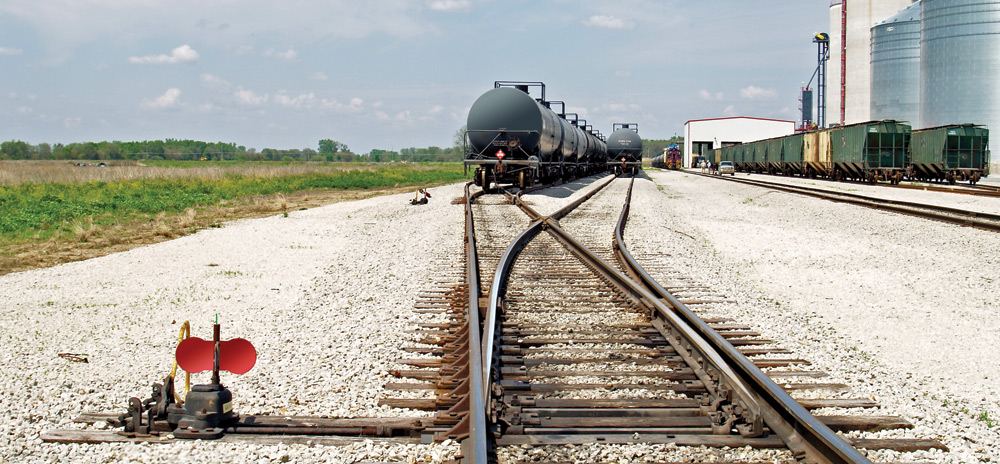
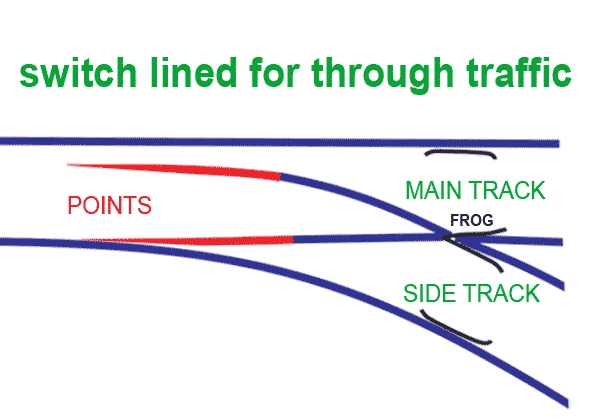
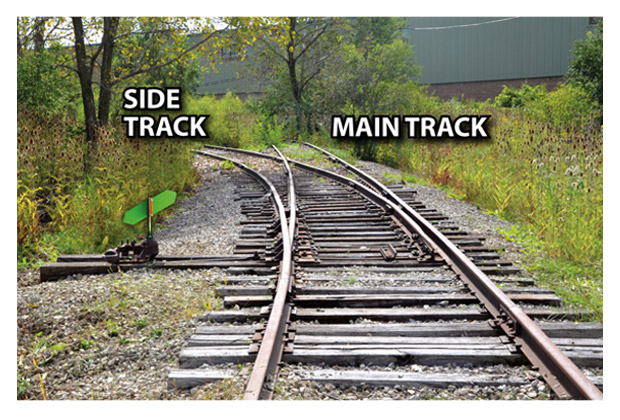
A switch creates two tracks: The main track and a side track turning either left or right. The photo above is a right-hand turnout.
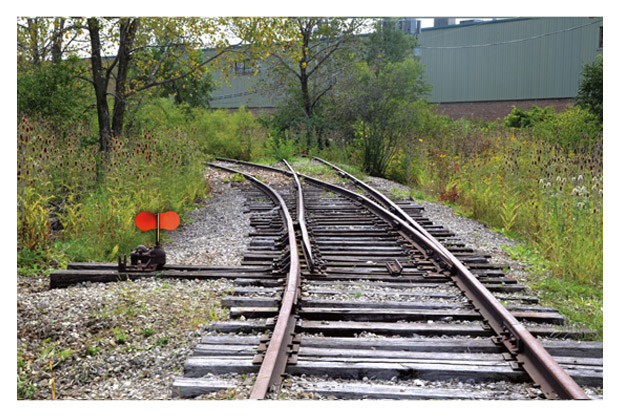
The heart of a switch is a pair of tapered rails called points which lie between the running rails and are slightly narrower in gauge. The points are hinged at one end and are controlled at the sharp end by a connection rod from the switch stand next to the track. When the switch stand lever is thrown, the points move from one running rail to the other. As the points move from side to side, a pair of sign plates (called targets) on the switch stand turn 90 degrees. Traditionally, the targets have consisted of one green plate and one red plate. The targets can be seen from either end of the switch, but only one color is visible at a time. The color of the target indicates the position of the switch: Green for the main track and red for the side track.
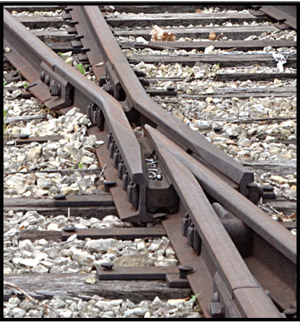
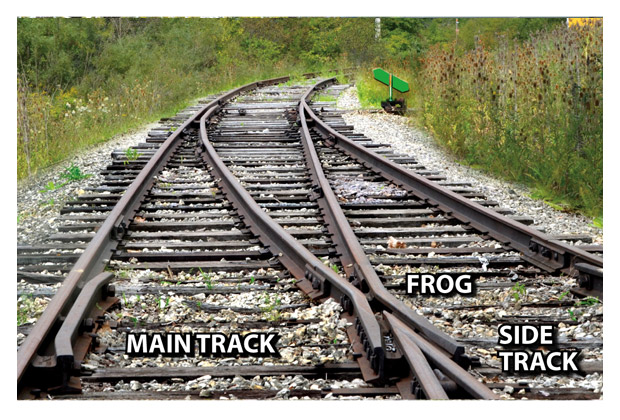
At the other end of the switch, where the main track separates from the side track, a “V”-shaped steel casting creates a gap on either side of the “V” to permit wheels to pass through on either track. This section of the switch is called “frog” because it resembles frog legs.
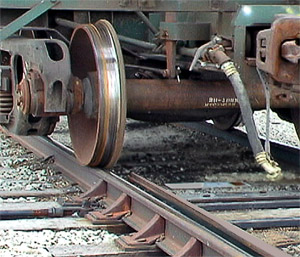
When the switch points are moved, a 5-inch gap is created alongside one of the running rails. This gap permits the wheel of the car or locomotive to go straight through the switch on the main track or into the turnout.
Looking at the switch from both ends
The view is very different from the two ends of the switch
POINTS END – Lined for Main Track
This is a left-hand switch which as been “lined” or positioned for travel through the switch on the main track in both directions. The green target indicates “through travel.” Note the gap between the right-hand point and its rail. The gap guides the wheels of the train along the main track rails. Normally a switch is kept positioned for main track travel.
FROG END – Lined for Main Track
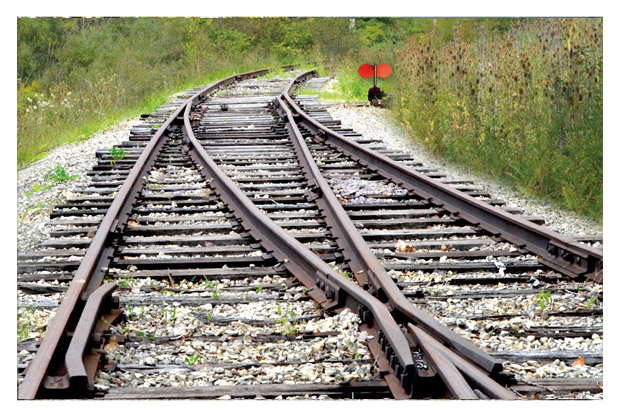
The other end of the left-hand switch is shown above. (Note that everything is reversed: The main track is now on the left and the side track is on the right). From this distance it is often difficult to see how the points at the other end of the switch are positioned. Thus, the worker must depend on the color/shape of the switch targets to know whether the switch is lined for main track through-travel, or for movement in and out of the turnout. In this case, the green target indicates that traffic can only proceed on the main track in either direction.
POINTS END – Lined for Side Track
Now, this left-hand switch has been “lined” or positioned for movement into the side track. There are two ways to know this. The gap between the left-hand point and its rail guides the rail car wheels along the curve of the turnout. The red target confirms that the switch has been lined for a turnout.
FROG END – Lined for Side Track
The red target indicates that the switch has been positioned for in and out movement on the side track. No main track movement is possible through the switch.
If you go through a switch that is lined against movement on your track, you risk derailment and damage to the switch.
How to read switch points
Mind the Gap
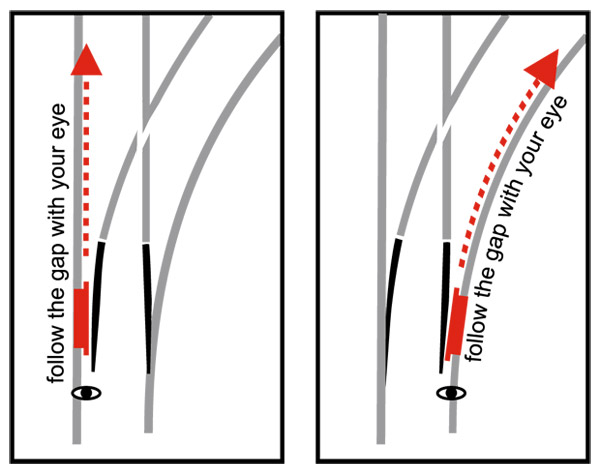
Always check to see if the positioning of the switch points agrees with the switch target. Here’s how:Stand facing the switch points and look for the gap between the one point and its running rail.
Run your eye along that rail and follow it through the switch; this is the way the wheels will go. Then ask yourself, “Is this the direction I want the train to go?”
Instructions
Our Sizing Form provides essential information to help us ensure that we deliver the best quality of your made-to-order item. We cannot process your order without the required information from the Sizing Form.
You can locate the Sizing Form by scrolling to the “Product Resources” section. Click to open the “fillable” PDF document and complete the information needed to process your order. Save the file and submit the completed Sizing Form by going to the “Upload Completed Sizing Form” located within the Orange Box.
You may need to open the form in Adobe Acrobat Reader rather than in your browser for the fillable boxes to be active.
It is ideal, but not essential, to submit your form with your order. If you are having issues with filling out the form electronically, you can print the form, fill it out, and then fax (847.623.6139), scan and email ([email protected]), or mail it (3410 Sunset Ave, Waukegan, IL 60087).