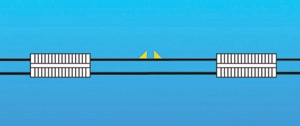
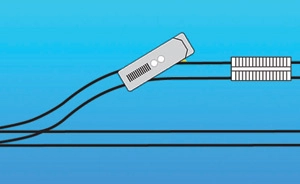
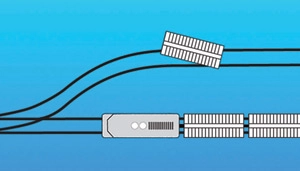
- An inexperienced worker may not know how to “read the points” or understand the meaning of conventional switch targets when aligning the switch.
- Workers operating locomotives can misunderstand the meaning of conventional targets and wind up forcing their way through a switch that was lined for the converging track. through switches which are lined for the converging track.
Resource Type: Content
OSHA Regulations For Signs
Signs & Lights
1910.261(c) …
(9) Traffic warning signs or signals. The blue flag policy shall be used to mark stationary cars day and night. This policy shall include marking the track in advance of the spotted cars (flag for daytime, light for darkness).
(ii) After cars are spotted for loading or unloading, warning flags or signs shall be placed in the center of the track at least 50 feet away from the cars and a derail set to protect workmen in the car.
Loading Tank Cars
1910.111(b) …
(iii) Caution signs shall be so placed on the track or car as to give necessary warning to persons approaching the car from open end or ends of siding and shall be left up until after the car is unloaded and disconnected from discharge connections. Signs shall be of metal or other suilable material, at least 12 by 15 inches in size and bear the words STOP-Tank Car Connected or STOP-Men at Work the word, STOP being in letters at least 4 inches high and the other words in letters at least 2 inches high.
(iv) The track of a tank car siding shall be substantially level.
(v) Brakes shall be set and wheels blocked on all cars being unloaded.
1910.110(b)(15) …
(iii) While cars are on sidetrack for loading or unloading, the wheels at both ends shall be blocked on the rails.
Freight Cars in General
1910.178(k)
(2) Wheel stops or other recognized positive protection shall be provided to prevent railroad cars from moving during loading or unloading operations.
(4) Positive protection shall be provided to prevent railroad cars from being moved while dockboards or bridge plates are in position.
1910.178(m) …
(7) Brakes shall be set and wheel blocks shall be in place to prevent movement of trucks, trailers, or railroad cars while loading or unloading.
1910.30(a) …
(5) Positive protection shall be provided to prevent railroad cars from being moved while dockboards or bridge plates are in position.
1910.176 …
(f) Rolling railroad cars. Derail and/or bumper blocks shall be provided on spur railroad tracks where a rolling car could contact other cars being worked, enter a building, work or traffic area.
OSHA Regulations For Derails
Loading Pulp and Paper Cars
1910.261(c) …
(4) Handling pulpwood from flatcars and all other railway cars.
(V) Flatcars and all other cars shall be chocked during unloading. Where equipment is not provided with hand brakes, rail damping chocks shall be used.
(vi) A derail shall be used to prevent movement of other rail equipment into cars where persons are working.
Loading Tank Cars
1910.111(b) …
(iii) Caution signs shall be so placed on the track or car as to give necessary warning to persons approaching the car from open end or ends of siding and shall be left up until after the car is unloaded and disconnected from discharge connections. Signs shall be of metal or other suilable material, at least 12 by 15 inches in size and bear the words ‘’STOP-Tank Car Connected” or ‘’STOP-Men at Work” the word, “STOP,’ being in letters at least 4 inches high and the other words in letters at least 2 inches high.
(iv) The track of a tank car siding shall be substantially level.
(v) Brakes shall be set and wheels blocked on all cars being unloaded.
1910.110(b)(15) …
(iii) While cars are on sidetrack for loading or unloading, the wheels at both ends shall be blocked on the rails.
Freight Cars in General
1910.178(k)
(2) Wheel stops or other recognized positive protection shall be provided to prevent railroad cars from moving during loading or unloading operations.
(4) Positive protection shall be provided to prevent railroad cars from being moved while dockboards or bridge plates are in position.
1910.178(m) …
(7) Brakes shall be set and wheel blocks shall be in place to prevent movement of trucks, trailers, or railroad cars while loading or unloading.
1910.30(a) …
(5) Positive protection shall be provided to prevent railroad cars from being moved while dockboards or bridge plates are in position.
1910.176 …
(f) Rolling railroad cars. Derail and/or bumper blocks shall be provided on spur railroad tracks where a rolling car could contact other cars being worked, enter a building, work or traffic area.
How To Choose The Right Kind Of Derail
Where to Install Derails
“ASK ALDON” Our sales engineers use aerial photos of your railyard to help you choose the best location for derail installation.
Contact us at [email protected] or 847.623.8800
1. Permanent vs. Portable
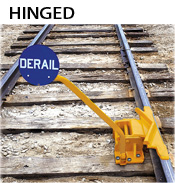
A permanent derail (hinged or retractable) gives you the convenience and security of a derail ready at all times to prevent unauthorized entry or car movement on your siding.
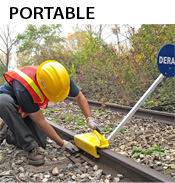
A portable derail gives you the flexibility of temporarily protecting any rail siding on your property.
2. Do you need 1-way or 2-way derail protection?
If your main concern is preventing unauthorized locomotive entry to your siding, choose a 1-way derail.
If you also need to prevent a rollaway car from leaving your siding, use a 2-way derail.
3. What size locomotives operate on your siding?
4-axle: choose 1-way or 2-way, any derail style
6-axle: choose 1-way derails, in any derail style. Use “low-angle” 2-way derails (the angle of deflection of the longer wheel base is too sharp for standard 2-ways) .. or, use two 1-ways back-to-back if traffic comes from two directions.
4. Type of rail and ties
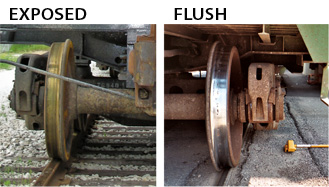
If you have exposed rail built on wooden ties you can use any derail.
If your track is on steel ties, your choice of derail is limited to the hinged derail plus our steel tie adapter plate.
Do not use any hinged derails on track built with resin or concrete ties. A hinged or moveable wedge-type car stop may serve in place of a derail. Contact us for advice. Another alternative is to replace two of the resin or concrete ties with wooden ties.
Portable derails are for use on wood or full length pre-stressed concrete ties made to North American designs. Do not use on resin or steel ties.
Do not use derails on flush rail. The derailed wheels may not be able to sufficiently dig into the surrounding pavement to bring the car to a prompt stop. The alternative is to excavate the pavement in order install a hinged or moveable wedge-type car stop. Contact us for advice.
5. Rail Size
Portable derails fit all rail sizes, 90 lb. and up. Hinged and retractable derails are made in four standard sizes, each of which fits a small range of rails. Submit a sizing form when ordering hinged or retractable derails.
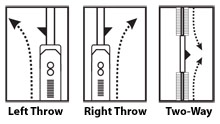
6. Direction of Throw
(Direction of throw is from the viewpoint of the oncoming locomotive or rail car.)

Derails: Important Information
How Derails Work
The derail lifts the flange of the wheel and drops it clear of the rail. At the same time the wheel on the other rail falls down between the rails. The derailed wheels bite into the soft surface of ties and ballast and slide to a stop.
Depending on speed, a derailed car or locomotive may travel some distance before stopping.
Effective derailing depends on
- Derail properly sized, installed, and maintained
- Cars and locomotives moving at slow switching speeds (less than 5 mph)
- Flat track — no grades
- Track open to the ties and ballast
- In curved track, derail installed on outer rail, not inner rail
- Ample open space along track for derailed car or locomotive to come to a stop
Derails help prevent:
One car rolling into another
Unauthorized locomotive coupling to stationary car
A loose car rolling out onto the mainline
Safe Ways To Use Your Forklift To Open Box Cars
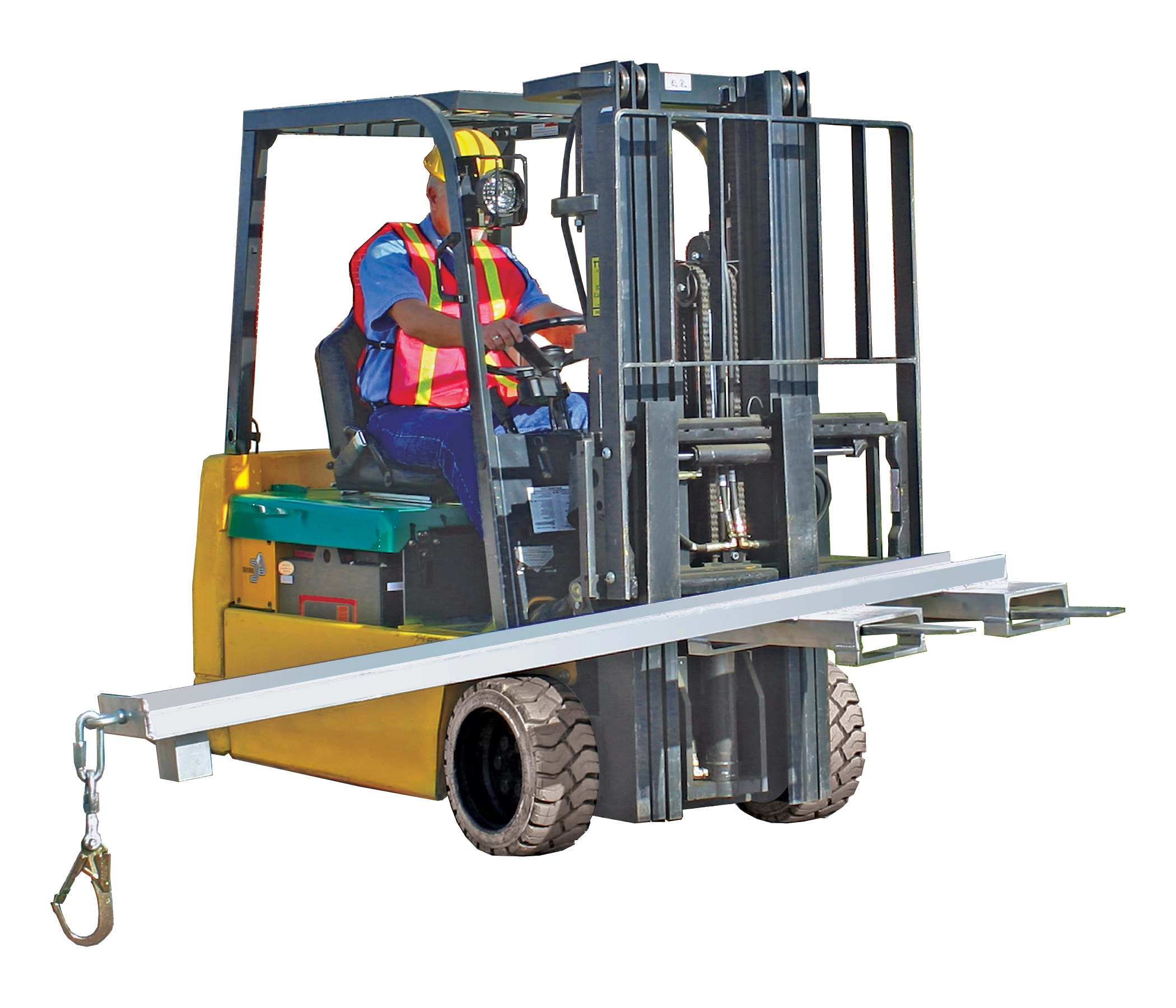
Our Box Car Door Opener meets OSHA’s exception to the ban against using forklift blades directly to open box car doors.
Welded-steel frame fits over paired fork blade up to 5″ wide (wider blades may be accommodated with custom fitting but may incur an additional charge). The swinging arm and backward and forward movements of the forklift allows the driver to open and close the door though the doorway.
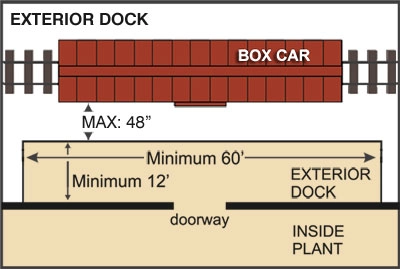
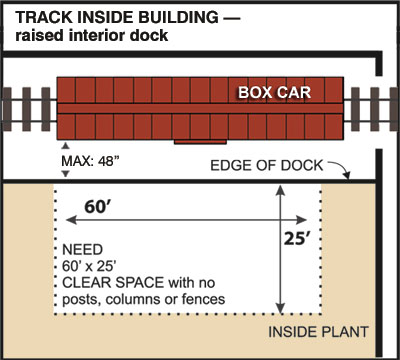
Aldor is designed for traditional open docks where there is a clear run alongside the box car. The track can run outside or within a building.
Aldor is available in two models. Both reach out to maximum 48″ gap between dock edge and side of car.
4020-14 Aluminum is a fixed length. Fits fork blades up to 7″ wide (wider blades may be accommodated with custom fitting but may incur an additional charge).
4020-02 Steel is adjustable in 6″ increments. Fits fork blades up to 5″ wide (wider blades may be accommodated with custom fitting but may incur an additional charge).
OSHA Regulations On Blue Lights
Signs & Lights
1910.261(c) …
(9) Traffic warning signs or signals. The blue flag policy shall be used to mark stationary cars day and night. This policy shall include marking the track in advance of the spotted cars (flag for daytime, light for darkness).
(ii) After cars are spotted for loading or unloading, warning flags or signs shall be placed in the center of the track at least 50 feet away from the cars and a derail set to protect workmen in the car…
OSHA Regulations
For Industrial Railroad Operations, Truck Dock Safety, and Overhead Cranes
Loading & Unloading Box Cars
1910.178(m)(6) as amended by OSHA Program Directive #100-63 (10/78) …
When a powered industrial truck is used to open freight car doors, and the truck is using an attached device specifically designed to open car doors, the violation of that part of 29 CFR 191 0.178(m)(6) shall be considered “de minimus,” when the following requirements have been met:
a. The design of the door opening device shall require the force applied by the device to the door to be in a direction parallel with the door travel.
b. The operator is trained in the use of the door opening device and keeps the operation in full view.
c. Employees, other than the operator, stand clear while the door is being moved.
Aldon® products to use: Easy-Slide or Aldor
Pulp and Paper Manufacturing
Handling pulpwood from flatcars and all other railway cars: 1910.261(c)(4) …
(v) Flatcars and all other cars shall be chocked during unloading. Where equipment is not provided with hand brakes, rail clamping chocks shall be used.
(vi) A derail shall be used to prevent movement of other rail equipment into cars where persons are working.
Aldon® products to use: Wheel Chocks, Derails, and Car Blocks
Traffic warning signs or signals: 1910.261(c)(9) …
(i) The blue flag policy shall be used to mark stationary cars day and night. This policy shall include marking the track in advance of the spotted cars (flag for daytime, light for darkness).
(ii) After cars are spotted for loading or unloading, warning flags or signs shall be placed in the center of the track at least 50 feet away from the cars and a derail set to protect workmen in the car.
Aldon® products to use: Blue Flag Signs, and Lights
Loading Tank Cars
Anhydrous Amonia: 1910.111(b)(13) …
(iii) Caution signs shall be so placed on the track or car as to give necessary warning to persons approaching the car from open end or ends of siding and shall be left up until after the car is unloaded and disconnected from discharge connections. Signs shall be of metal or other suitable material, at least 12 by 15 inches in size and bear the words ‘’STOP-Tank Car Connected” or ‘’STOP-Men at Work” the word, “STOP,’ being in letters at least 4 inches high and the other words in letters at least 2 inches high.
(v) Brakes shall be set and wheels blocked on all cars being unloaded.
Liquefied Petroleum Gas: 1910.110(b)(15) …
(ii) A “Tank Car Connected” sign, as covered by DOT rules, shall be installed at the active end or ends of the siding while the tank car is connected.
(iii) While cars are on sidetrack for loading or unloading, the wheels at both ends shall be blocked on the rails.
Aldon® products to use: Wheel Chocks, Blue Flag Signs, Car Blocks, and Derails
Freight Cars in General
1910.178(k)
(2) Wheel stops or other recognized positive protection shall be provided to prevent railroad cars from moving during loading or unloading operations.
(4) Positive protection shall be provided to prevent railroad cars from being moved while dockboards or bridge plates are in position.
1910.178(m) …
(7) Brakes shall be set and wheel blocks shall be in place to prevent movement of trucks, trailers, or railroad cars while loading or unloading.
1910.30(a) …
(5) Positive protection shall be provided to prevent railroad cars from being moved while dockboards or bridge plates are in position.
1910.176 …
(f) Rolling railroad cars. Derail and/or bumper blocks shall be provided on spur railroad tracks where a rolling car could contact other cars being worked, enter a building, work or traffic area.
Aldon® products to use: Wheel Chocks, Blue Flag Signs, Car Blocks, and Derails
Loading & Unloading Semi-Trailers
1910.178(k)
(1) The brakes of highway trucks shall be set and wheel chocks placed under the rear wheels to prevent the trucks from rolling while they are boarded with powered industrial trucks.
(3) Fixed jacks may be necessary to support a semitrailer and prevent upending during the loading or unloading when the trailer is not coupled to a tractor.
1910.178(m) …
(7) Brakes shall be set and wheel blocks shall be in place to prevent movement of trucks, trailers, or railroad cars while loading or unloading. Fixed jacks may be necessary to support a semitrailer during loading or unloading when the trailer is not coupled to a tractor.
1910.111(f) …
(9) Chock blocks. At least two chock blocks shall be provided. These blocks shall be placed to prevent rolling of the vehicle whenever it is parked during loading and unloading operations.
1910.261(c) …
(7) Handling pulp chips from trucks and trailers. i) All trucks and trailers shall be securely fastened in place and all employees in the clear before dumping is started.
Aldon® products to use: Wheel Blocks and Trailer Stabilizing Jacks
Single or Multiple Crane Operations
1910.179(k)(2) …
(e) Where other cranes are in operation on the same runway, rail stops or other suitable means shall be provided to prevent interference with the idle crane
Aldon® products to use: Portable Crane Stops